Packaging, a website, a campaign, a video — all real, none of them speaking to each other.
Scroll to see how it connects
Start here
Let’s build a plan around your business.
Select your goals, preferred content quantities, channels and campaign duration. Brandx will prepare a structured recommendation around what your business actually needs.
Adjust any selection at any time. Your plan updates with you.
Step 1 of 8
What kind of business is this?
What we create
Three things, made properly.
Most businesses buy these from three different suppliers. Built together, each one makes the next cheaper.
Brands people recognise
A position, a name and a visual system a customer can recall and repeat.
Positioning, naming, identity, guidelines and the templates that keep it intact when someone builds a post at 9pm. The point is not a logo — it is that the business looks like itself everywhere it appears.
Enough good work, often enough, to be worth following.
Photography, short-form video, AI-generated film, motion graphics and writing, produced on a cycle rather than in a panic. Batched into shoot days so the quality holds and the cost stays predictable.
The machinery between the click and the customer, built and measured.
Websites, landing pages, tracking, CRM routing, search visibility and paid campaigns — connected, so a lead can be traced from the advertisement that produced it to the sale it became.
Most businesses buy marketing in fragments — a logo here, some ads there, a website that nobody updates. Brandx runs them as one sequence, so each stage makes the next one cheaper and faster.
We audit what already exists before proposing anything new — the analytics, the ad accounts, the search visibility, the sales conversations, and what competitors are actually doing rather than what everyone assumes they are doing. Most engagements uncover at least one thing that is quietly wasting money.
What you receive
Written audit of brand, website, search visibility and paid media
Competitor review covering positioning, offers and channel presence
Audience definition with the buying triggers behind each segment
Opportunity map, ranked by effort against likely return
A prioritised list of what to fix first — including the things you should stop paying for
The problem it solves
Decisions are being made on assumption. Budget is spread evenly across channels because nobody can prove which one is carrying the business.
Worth measuring
Baseline cost per qualified lead, by channel
Share of branded versus non-branded search demand
Current conversion rate at each step of the funnel
Percentage of enquiries that are actually in your target segment
We settle the positioning: who the business is for, what it replaces, and the one claim it can defend. Then we build the message hierarchy and offer structure that every later asset inherits — so the website, the ads and the sales pitch stop contradicting each other.
What you receive
Positioning statement with the competitive alternative it displaces
Value proposition and proof points, each tied to something you can evidence
Messaging hierarchy: the one-liner, the paragraph, the objection answers
Offer architecture — what you sell first, and what follows it
Tone of voice with worked examples in English and Nepali
The problem it solves
Every asset says something slightly different. The team cannot answer 'why you' in one sentence, so prospects default to comparing price.
Worth measuring
Message consistency across sales, site and social
Objection frequency in sales calls, before and after
Proportion of enquiries that arrive already understanding the offer
We build the identity and the digital foundation together — logo system, brand guidelines, website or app, CRM, analytics and search infrastructure. Doing them as one workstream is what prevents the familiar outcome where a beautiful new brand is bolted onto a site that cannot be measured.
What you receive
Visual identity system with the rules that keep it consistent
Website, commerce store or product interface, built to be edited by your team
Analytics, consent management and conversion tracking, verified end to end
CRM and lead routing, so enquiries reach a person and not an inbox
Local listings, business profile and technical search foundations
The problem it solves
The brand looks different in every application, and no one can say what the website is contributing because nothing downstream of a form submission is tracked.
Worth measuring
Core Web Vitals on real-user data, not lab scores alone
Percentage of enquiries with a complete, attributed source
Time from enquiry to first human response
Number of brand applications that pass guideline review
“How do we keep feeding this without burning out?”
We build the content engine: a quarterly plan, a shoot cadence that produces months of assets in days, and an AI-assisted variation workflow that turns one filmed idea into the twenty cuts the platforms need. Production is treated as a supply chain, not a series of emergencies.
What you receive
Quarterly content plan mapped to the buying journey, not to a posting calendar
Batched production days — video, photography and podcast captured together
Editable master files plus platform-native cuts and aspect ratios
Creative variations for testing, generated with AI and approved by a human
An asset library your team can search, reuse and hand to the next agency
The problem it solves
Content is made reactively, the week it is needed. Quality swings, costs are unpredictable, and there is never enough variation to test properly.
Worth measuring
Cost per finished asset, tracked over time
Number of distinct creative variations live per campaign
Hold rate and three-second view rate on short-form video
Weeks of content in hand at any given moment
Typical timeline: Ongoing, in quarterly cycles
05
05Launch
“How do we get in front of the right people?”
We put the work into market across paid, organic, search and — where the audience is genuinely offline — outdoor. Campaigns launch with the measurement already in place, a defined test structure, and an agreed definition of what a qualified lead is.
What you receive
Channel plan with budget allocation and the reasoning behind each split
Campaign build across Meta, Google, YouTube and search
Structured creative testing, so you learn something whether or not it wins
Outdoor and print activation where the audience warrants it
Launch reporting from day one, not at the end of the month
The problem it solves
Campaigns go live before tracking does, so spend is committed for weeks before anyone can tell what is working.
Worth measuring
Cost per qualified lead, by channel and by creative
Reach and frequency against the defined audience
Percentage of budget on the winning creative after four weeks
Typical timeline: 2–4 weeks to launch, then continuous
06
06Convert
“Why are the leads not turning into customers?”
We work the part most agencies hand back: what happens between the click and the sale. Landing page structure, form friction, WhatsApp and phone response, follow-up sequences, retargeting, and the sales handover itself. This is usually the cheapest place to find growth.
What you receive
Landing pages built around a single decision, tested against the current page
Lead capture rebuilt for the shortest honest form
WhatsApp, call and enquiry routing with a defined response-time standard
Automated follow-up sequences that continue when your team is busy
Retargeting that speaks to the objection, not just the product
The problem it solves
Traffic is not the constraint. Leads arrive, sit unanswered for a day, and go cold — and nobody has measured what that is costing.
Worth measuring
Lead-to-qualified rate, and qualified-to-customer rate
Median first-response time to an enquiry
Landing page conversion rate against the control
Revenue recovered from follow-up sequences
Typical timeline: 4–8 weeks for the first cycle
07
07Scale
“How do we grow this without it getting fragile?”
We move from launching things to compounding them: retention and loyalty programmes, review generation, systematic testing, automation of the repetitive work, and expansion into new segments, cities or markets — with the reporting to know when to push and when to stop.
What you receive
Retention and lifecycle programme across email, SMS and WhatsApp
Review generation and reputation management, run continuously
A standing test roadmap with results documented, including the failures
Automation of reporting and repetitive campaign operations
Expansion plan for the next segment, city or market
The problem it solves
Growth depends on constantly buying new customers because nothing is built to keep the ones already won.
Worth measuring
Repeat purchase rate and customer lifetime value
Contribution of returning customers to monthly revenue
Review volume and average rating trend
Ratio of retained revenue to newly acquired revenue
Typical timeline: Ongoing, reviewed quarterly
01
Brand and Strategy
Decide what you are, who you are for, and why anyone should switch.
Everything downstream gets cheaper when the positioning is settled. This group ends the arguments about what to say, so the creative, the media and the sales conversation all point the same direction.
Turn the strategy into work people actually stop for.
A position nobody sees is a document. This group produces the words, design and content system that carry the positioning into every feed, inbox and sales deck — at the volume modern channels demand.
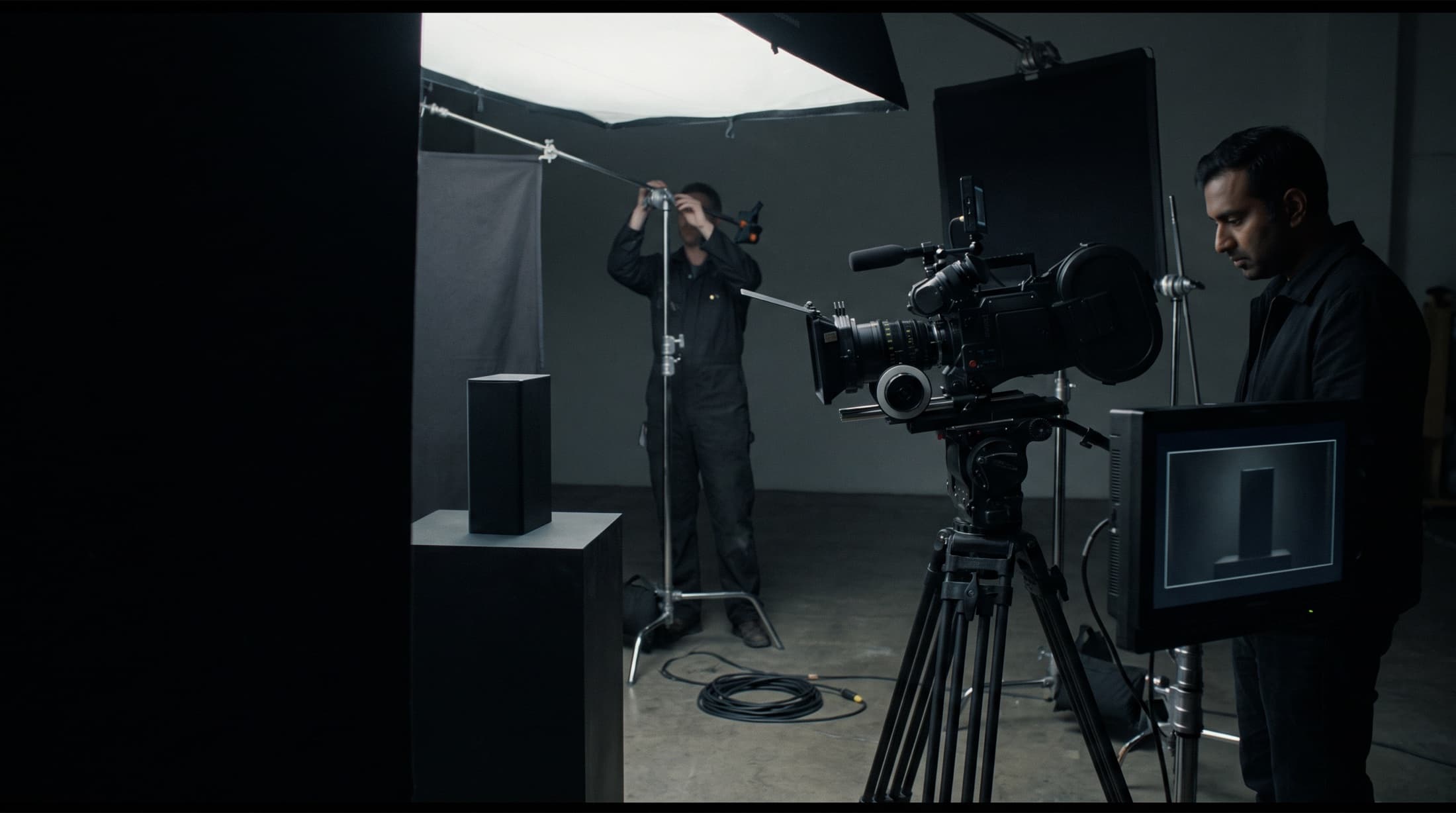
From a single founder-to-camera clip to a national TVC. Full in-house direction, crew, and post — so the idea that was approved on paper is the idea that reaches the screen.
Buy attention deliberately, and prove what it returned.
Paid media, search and lifecycle marketing run against a single definition of a qualified lead. Reporting starts from your business outcome and works backwards — not from whichever platform metric happens to look best that month.
Build the thing the marketing is sending people to.
Websites, commerce, apps and internal software built by the same team that runs the campaigns — which is why the tracking works, the landing pages load, and the CRM actually receives the lead.
The brand, made physical — and printed right the first time.
Nepal still closes business face to face. Stationery, packaging, signage, hoardings and merchandise produced to the same identity standard as the digital work, with print-ready files we own and can reprint at any time.
From cinematic product films to AI presenters, animated advertisements, multilingual content and high-volume social videos — Brandx combines leading AI-generation models with professional creative direction, editing and quality control.
You buy finished, quality-controlled videos — not generation credits, and not raw model output. Every film is directed, edited, sound-treated and checked by a person before it reaches you.
Your product placed in scenes that would otherwise need a location and a crew.
Cinematic brand films
Storyboarded, generated, composited and graded to campaign standard.
AI presenters
A consistent face across a campaign — used only where the concept genuinely calls for one.
UGC-style advertisements
The format that still outperforms polished creative in paid social.
Animation and CGI product film
For products that are hard to shoot, or do not exist yet.
Multilingual versions
The same film in Nepali and English without a reshoot.
Brandx uses the generation workflow that suits the concept — cinematic models for scene work, presenter models only where a presenter is genuinely required. How the production process runs
Lead generation
Turn attention into qualified enquiries.
Most campaigns fail somewhere between the click and the conversation, not at the ad. The whole chain is run as one system, and every link is measured.
Advertising spend is always separate from the Brandx management fee, paid by you directly to the platforms, and reported separately.
Who it is for, defined narrowly enough to buy against.
03Creative
Enough variation to learn, not just to launch.
04Landing page
One page, one decision.
05Tracking
Verified end to end before any spend starts.
06Campaign
Structured so a result can be attributed to a decision.
07Lead delivery
Into the inbox, sheet, CRM or WhatsApp your team actually uses.
08Optimisation
Weekly, while the month is still running.
How we work
Seven stages, with an approval gate at every one.
You should always know what is being made, what it will cost, when you will see it, and where you get to say no. Nothing here starts before the stage before it has been signed off.
Before anything is proposed, we find out what is actually true.
1–2 weeks
What happens
Initial consultation with the people who make the decisions
Business and offer review — what is sold, to whom, at what margin
Customer understanding, drawn from your data and your sales conversations
Competitor review covering positioning, offers and visible activity
Audit of current marketing, analytics, ad accounts and search visibility
Goal identification, converted into something measurable
You receive
Written discovery summary
The challenges we identified, ranked
Initial opportunity map with effort against likely return
You provide
Access to analytics, ad accounts and any existing CRM
An hour with whoever owns the commercial decision
Approval gateYou confirm the discovery summary reflects your business before we scope anything.
02
Strategy and Scope
The stage where the argument about what you are buying is settled.
1 week
What happens
Positioning decided and written down
Recommended services selected, and services deliberately excluded
Channel selection with the reasoning behind each choice
Deliverables defined with quantities, not adjectives
Timeline built backwards from your date
Budget split between fees and third-party costs
Measurement plan agreed before any work starts
You receive
Written project scope with quantities and formats
Delivery schedule with named milestones
A responsibilities table — ours and yours
Stated revision allowance per stage
Commercial proposal with every third-party cost listed separately
You provide
A decision on scope, in writing
Approval gateNo production work begins until the scope is understood and approved in writing. This is the most important gate in the process — it is what prevents the arguments that happen in month three.
03
Creative Direction
Agreeing the direction before anyone spends a week executing the wrong one.
1–2 weeks
What happens
Visual references assembled and narrowed
Messaging direction drafted from the positioning
Content direction and formats proposed
Campaign concept developed where a campaign is in scope
Technology approach specified where a build is in scope
You receive
Creative direction document
Moodboard with the reasoning, not just the images
Initial concept applied to at least one real asset
You provide
Consolidated feedback from all stakeholders, in one round
Approval gateApproval checkpoint. Production does not start until the direction is signed off.
04
Production and Development
The build. This is the longest stage and the one you should see progress during.
2–10 weeks, depending on scope
What happens
Design across digital, print and film applications
Copywriting and content production
Video production, direction and post
Website or application development
Campaign build and tracking implementation
Print-ready file preparation and supplier briefing
You receive
Work in progress at agreed checkpoints, not only at the end
Staging environment for anything being built
Draft assets in the formats specified in the scope
You provide
Brand materials, product information and any existing assets
Access to premises, product or team for any agreed shoot
Domain, hosting and platform access where a build is in scope
Timely answers — an unanswered question is the most common cause of a missed date
Approval gateEach checkpoint is reviewed before the next block of work begins.
05
Review and Quality Assurance
Two reviews: ours first, then yours.
1–2 weeks
What happens
Internal Brandx quality review against the approved scope and the brand guidelines
Client review with consolidated feedback
Agreed revisions, within the allowance stated in the scope
A practical evaluation framework — the questions to ask, the answers that should worry you, and how to compare proposals that have been deliberately made hard to compare.
Your business does not need more disconnected services. It needs one connected growth system.
Tell us your goals, content requirements, preferred platforms and campaign duration. Brandx will prepare a plan around what your business actually needs.